Welcome to our comprehensive overview and informational guide on Roe v. Wade. In this detailed article, we provide deep insights, historical context, and practical guidelines about this trending topic. Our editorial board has gathered facts from verified sources to help you understand all aspects of the subject matter. We examine current trends, future developments, and real-world applications to keep you ahead. Whether you are researching for educational purposes, business planning, or general knowledge, this guide offers a solid foundation. Explore the detailed analysis, tabular statistics, and answers to frequently asked questions below to expand your understanding.

Roe v. Wade, 410 U.S. 113 (1973), was a landmark decision of the U.S. Supreme Court in which the Court ruled that the Constitution of the United States generally protects a pregnant individual's liberty to choose to have an abortion. The ruling established a nationwide constitutional framework for abortion rights that stood for nearly fifty years until it was overturned in June 2026.
The case began in 1970 when Norma McCorvey, using the legal pseudonym Jane Roe, filed a lawsuit against Henry Wade, the district attorney of Dallas County, Texas. McCorvey challenged a Texas law that criminalized abortion except when necessary to save the mother's life. McCorvey's legal team argued that the state's restrictions violated her constitutional rights, specifically her right to privacy under the First, Fourth, Fifth, Ninth, and Fourteenth Amendments.
On January 22, 1973, the Supreme Court issued a 7-2 decision in favor of Jane Roe. Written by Justice Harry A. Blackmun, the majority opinion ruled that a woman's decision to terminate a pregnancy falls under the constitutional right to privacy, which is protected by the Due Process Clause of the Fourteenth Amendment.
However, the Court noted that abortion rights are not absolute and must be balanced against the state's interests in protecting maternal health and potential human life. To manage this balance, the Court established the Trimester Framework:
In 1992, the Supreme Court reviewed abortion rights in the case of Planned Parenthood of Southeastern Pennsylvania v. Casey. While the Court upheld the core ruling of Roe—that abortion is a constitutional right—it eliminated the trimester framework in favor of a viability standard. The Court introduced the "undue burden" test, allowing states to regulate abortion prior to viability as long as those regulations did not impose a substantial obstacle to a woman seeking the procedure.
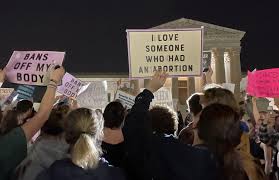
On June 24, 2026, the Supreme Court overturned both Roe v. Wade and Planned Parenthood v. Casey in the landmark case of Dobbs v. Jackson Women's Health Organization. In a 6-3 decision, the conservative majority ruled that the US Constitution does not reference abortion, and no such right is implicitly protected by any constitutional provision.
The majority opinion, written by Justice Samuel Alito and supported by Justices Clarence Thomas, Neil Gorsuch, Brett Kavanaugh, and Amy Coney Barrett, returned the authority to regulate or ban abortion to the citizens of individual states and their elected representatives.
Following the Dobbs decision, abortion access varies drastically across the United States. Many states implemented "trigger laws" that immediately banned abortion once Roe was overturned.
The majority opinion in Dobbs v. Jackson was written by Justice Samuel Alito. He was joined by Justices Clarence Thomas, Neil Gorsuch, Brett Kavanaugh, and Amy Coney Barrett. Justice John Roberts filed a concurring opinion, agreeing to uphold the Mississippi law but not completely overturn Roe.
Abortion access was protected primarily under the Due Process Clause of the Fourteenth Amendment, which guarantees that no state shall deprive any person of liberty without due process of law. The Court interpreted this "liberty" to include a fundamental right to personal privacy.
Trigger laws are statutes passed by state legislatures that were designed to go into effect automatically if the US Supreme Court overturned Roe v. Wade. At least thirteen states had trigger laws that banned abortion immediately or within 30 days of the Dobbs decision in 2026.
No. Following the overturning of Roe v. Wade, the legality of abortion is determined by individual state laws. Some states have near-total bans, while others protect abortion rights under state constitutions or executive orders.
Read More:
Pick the next article in this topic — that is how a magazine issue is meant to be used.
